
Back to the 2016 paper
Module 2: Data Link Layer & MAC Sublayer
20167m
Assume that source S and destination D are connected through two intermediate routers labelled R. Determine how many times each packet has to visit the network layer and the data link layer during a transmission from S to D.
Similar questions
Computer NetworksExplain the distance vector routing for the following example. 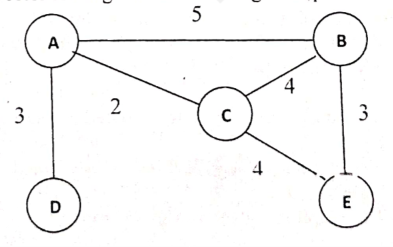20247mComputer NetworksWith a neat diagram, explain distance vector routing protocol.20217mComputer NetworksExplain type of delays in computer networks. Suppose a node A wants to send data of 200 mb to node B. The bandwidth of the channel is 1 Gbps. There are three routers in between node A to node B. Assume other delays equal to 0. Calculate the total delay involved.201914mComputer NetworksDraw a neat diagram of TCP/IP protocol stack with the protocols and functionality implemented on each layer. Also explain, why there is a need for having a layered architecture (like OSI and TCP/IP) in networks.201914m
PreviousThe address of a class B host is to be split into subnets with a 6-bit subnet number: What is the maximum number of subnets and the maximum number of hosts in each subnet? What is the number of networks allowed under Class B addresses?NextIn an IPv4 datagram, the M bit is 0, the value of HLEN is 10, the value of total length is 400 and the fragment offset value is 300. Find the position of the datagram, the sequence numbers of the first and the last bytes of the payload respectively.
Official AppAndroid App
PYQDeck for Android
Solve BEU previous-year exam papers anywhere, anytime. Fast search, offline paper viewing, and step-by-step solutions designed specifically for your phone.