
Back to the 2023 paper
Similar questions
Design and Analysis of Algorithms State the graph coloring problem and write the algorithm. Apply backtracking technique to solve the 3-colouring problem for the following graph. 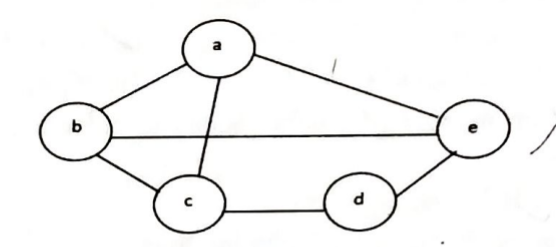20227mDesign & Analysis of AlgorithmsExplain back-tracking, DFS and BFS with help of small example. Differentiate in between backtracking and dynamic programming. Apply the backtracking algorithm to solve the three-colouring problem for the following graph using state space tree. Assume three colours red, green and blue. 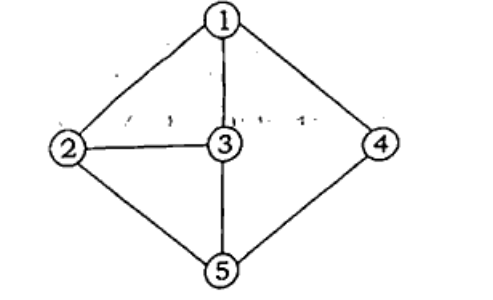201914mDiscrete MathematicsConsider the following graph (a) Does a Hamiltonian path exist? If so describe it. If not say why not.20237mDesign and Analysis of Algorithms A graph with five nodes is represented using the adjacency list as follows: | | | | | | |---|---|---|---|---| | A | -> | B (10) | C (3) | | | B | -> | C (1) | D (5) | | | C | -> | B (4) | D (8) | E (2) | | D | -> | E (7) | | | | E | -> | D (9) | | | Answer the following: (i) Draw the graph for the above adjacency list. (ii) Write the algorithm for the Breadth-First Traversal (BFS). (iii) Show the BFS traversal of the graph with the starting node as A.20247m
PreviousYou are a thief planning to rob a jewelry store. The store contains 7 items, each with a profit P and weight W as follows: | Object | 1 | 2 | 3 | 4 | 5 | 6 | 7 | |---|---|---|---|---|---|---|---| | Profit (P) | 5 | 10 | 15 | 7 | 8 | 9 | 4 | | Weight (W) | 1 | 3 | 5 | 4 | 1 | 3 | 2 | You have a knapsack with a weight capacity of 15. Apply the step-by-step greedy approach to obtain the maximum profit.NextDifferentiate between backtracking and branch & bound.
Student FinanceWeb Platform
Pocketly — Personal Finance for Students
Keep your hostel and college expenses under control. Track accounts, log spending in seconds, and stay within your monthly budget.